Our Products

COUPLER

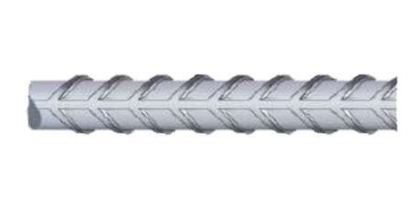
REINFORCEMENT BAR COUPLERS
Lapped joints are not always an appropriate means of connecting rebar. Reinforcing Bar Couplers can simplify the design and construction of reinforced concrete and reduce the amount of reinforcement required. Rebar couplers offer a full-strength connection together with enhanced fatigue resistance. They are suitable for projects of all sizes, including those requiring a high volume of couplers, such as road and rail, bridges.

PARALLEL THREADED COUPLERS

Parallel threaded mechanical splicing system designed for the connection of concrete reinforcing bars from Ø16 mm to Ø40 mm.

PRODUCT FEATURES AND STEEL GRADES:

Rebar Couplers are designed and manufactured in compliance with: Eurocode 2, BS 8110, DIN 1045, ACI 318, ASME Sec III Div 2. The mechanical splice connection develops in tension or compression more than 125% of the specified yield strength of the concrete reinforcement bar.

We can supply rebar couplers made from any customized size and steel grade. The standard size range of the more widely used parallel threaded rebar couplers are of grades EN 8D.

Cold Forging Coupler

Bar Diameter (mm) 16 20 25 32 40
External Diameter (mm)
25
32
40
50
62
Coupler Length (mm)
36
44
50
64
80
Thread Size
M18
M24
M29
M36
M45
Thread Pitch (mm)
2.5
2.5
3.0
3.0
4.0

Roll Thread Couplers

Bar Diameter (mm) 16 20 25 32 40
External Diameter (mm)
25
32
40
50
62
Coupler Length (mm)
40
50
60
80
90
Thread Size-ID (mm)
14.5
18.5
23.5
30.5
38.5
Thread Pitch (mm)
2.5
2.5
3.0
3.0
3.5

BENEFITS

Design-Friendly

  • Reduces rebar congestion & improves concrete consolidation.
  • Improves the steel-to-concrete ratio.
  • Eliminates lap splices in high-stress regions.
  • Allows greater flexibility in design options.

Reliable

  • Performs like a continuous piece of rebar.
  • Splice strength developed independent of concrete.
  • Provides ductility independent of concrete condition.
  • Achieves greater strength.
  • Offers strength during man-made, seismic and other natural events.
  • Increased shear load capacity.
  • Promotes low cycle fatigue performance.
  • Economical

  • Requires no special skills & reduces labor costs.
  • Accelerates construction schedules for optimum cost and efficiency.
  • Reduces material costs because less rebar is used.
  • Splicing Methods:

    Standard Splice (Type A)

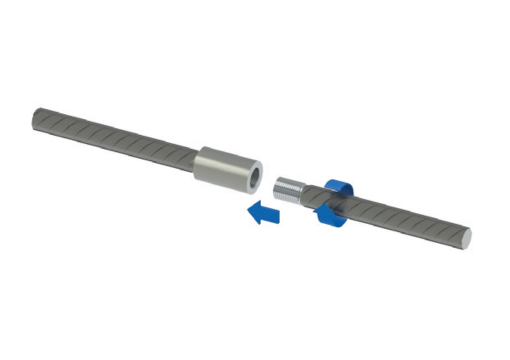
    Easy connection by bar rotation until full thread engagement. Thanks to the parallel thread:
    No risk of thread mismatch.
    No risk of cross-threading.
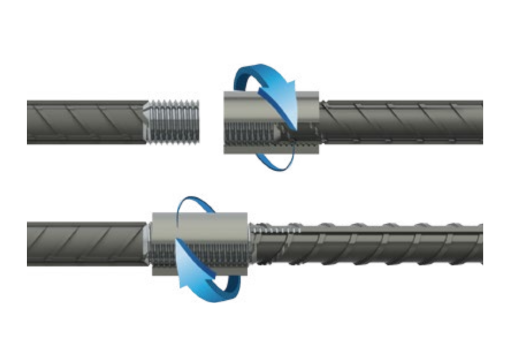
    Position splice (Type B)

    Even when both bars cannot be turned, the NG system uses a standard coupler. The coupler is fully engaged onto the extended thread of the connecting bar (step 1). The assembly is simply completed by butting the bars end to end and screwing back the coupler onto the first bar until full engagement (step 2).
    REBAR PREPARATION PROCESS

    Rolltech Parallel Threading (Type A)

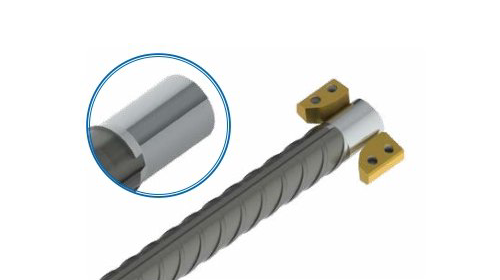
    PEELING

    The rebar's end is prepared by peeling its ribs.
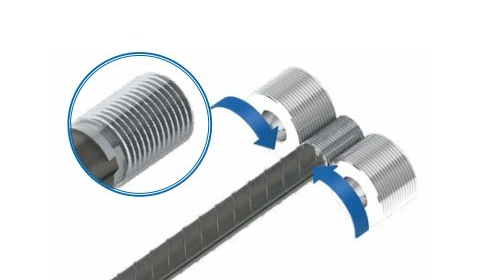
    THREAD ROLLING

    Threads are formed on the smooth end of the reinforcing bar by rolling.
    Cold Forging (Type B)

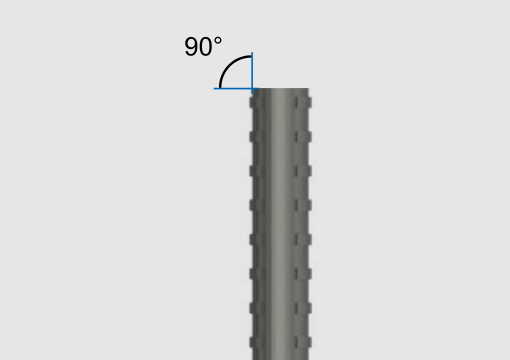
    CUTTING

    A saw is used to cut the rebar's end at a precise 90-degree angle.
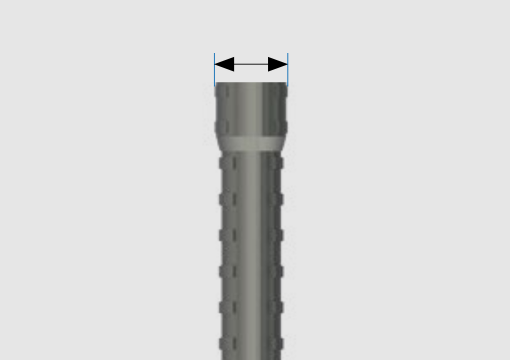
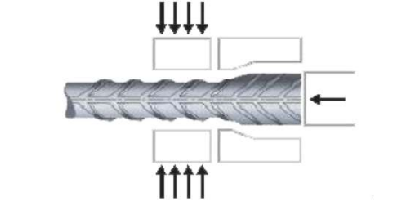
    COLD FORGING

    The square-cut end of the reinforcing bar is expanded to a precise size using a patented cold-forging method.
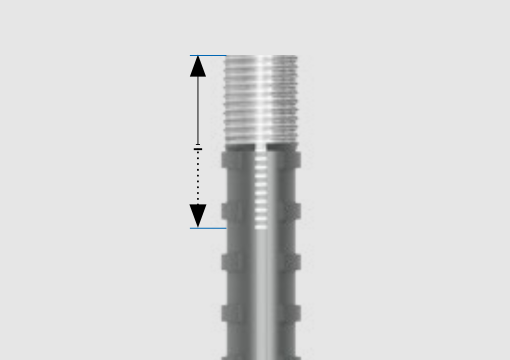
    THREADING

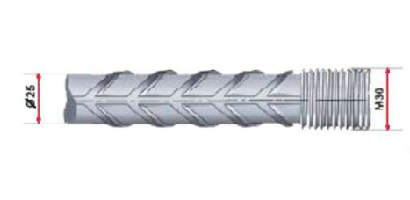
    A thread is then mechanically formed on the enlarged end of the bar.

    Process

    1
    2
    3